Volume Landmarks
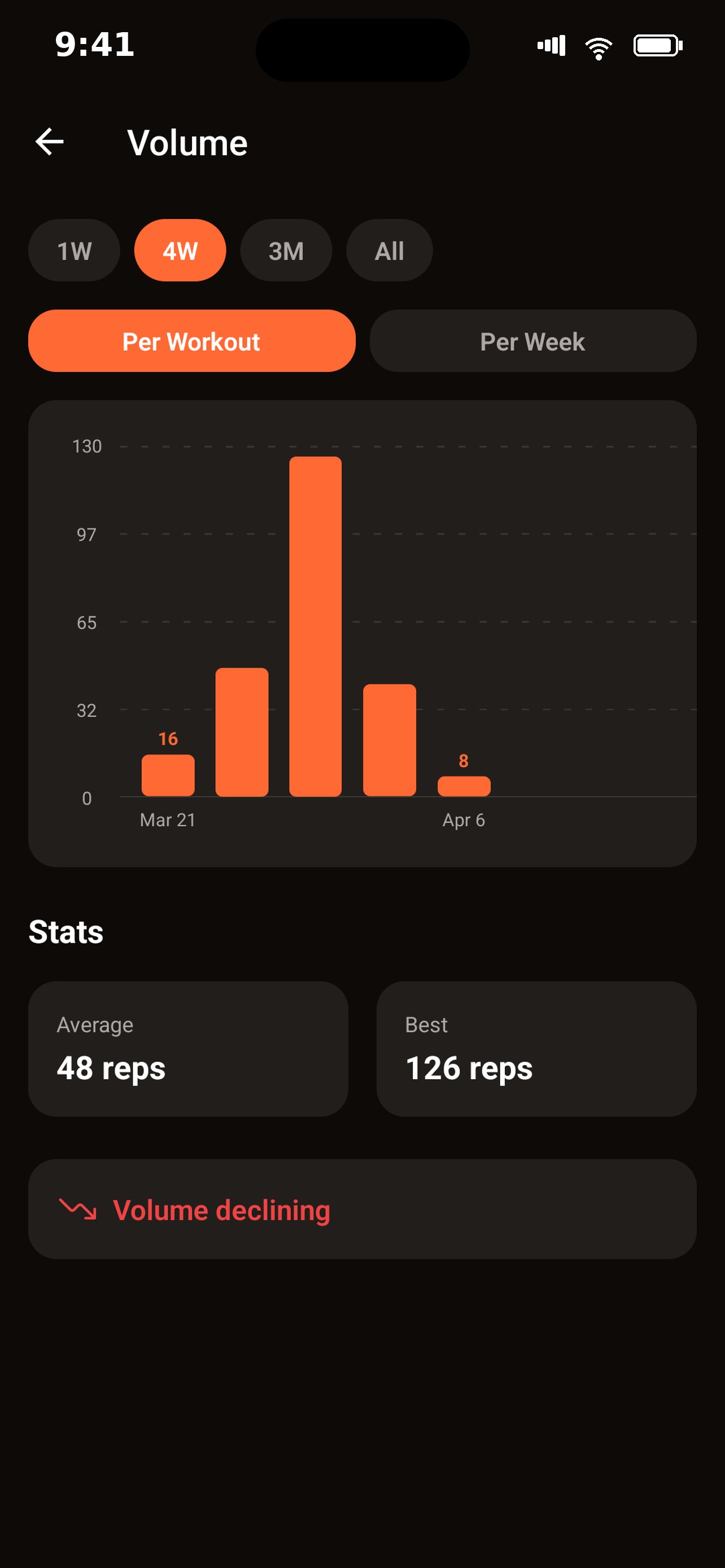
Too little volume and you stall. Too much and you regress. Forssa keeps every muscle in the proven growth range — automatically.
Tip: start near your MEV and increase volume gradually each week.
— Schoenfeld et al., 2017
7 questions. A program built with auto-periodization, per-muscle volume targets, and push/pull balance. No guesswork.

Nothing is guessed. Forssa uses peer-reviewed principles to build every program.
Too little volume and you stall. Too much and you regress. Forssa keeps every muscle in the proven growth range — automatically.
Tip: start near your MEV and increase volume gradually each week.
— Schoenfeld et al., 2017
Shoulder pain? You're probably pushing more than you pull. Forssa checks the balance before your program is finalized.
Tip: for every bench press, match it with at least one equivalent row.
— Baldon et al., 2014
Training each muscle twice a week beats once when total volume is equated. The split is picked to guarantee this.
Tip: training 3 days? Full Body beats PPL for per-muscle frequency.
— Schoenfeld, Ogborn & Krieger, 2016
Before reaching you, every program passes 11 checks: volume, balance, coverage, duration, exercise order. Scored 0 to 100.
Tip: programs scoring below 70 get automatically rebuilt.
— Forssa quality pipeline
Beginners don't need Arnold Split. Advanced lifters don't grow on beginner volume. Your program adapts everything to where you are.
Tip: advanced lifters may need 20+ sets/week per muscle group.
— Helms et al., 2018
The research behind every decision
“Training each muscle group at least twice per week produces superior hypertrophy compared to once per week.”
“Dose-response relationship: higher weekly volume leads to greater muscle growth, with diminishing returns past ~20 sets.”
“RPE-based autoregulation produces similar strength and hypertrophy outcomes to fixed-percentage programming.”
“When volume is equated, training frequency does not significantly impact hypertrophy — volume is the key driver.”
Structured training, real progress tracking, muscle balance — all in one place.
Goal, experience level, days per week, available equipment, session length, and which muscles you want to focus on.
If you train 3 days, PPL doesn't make sense — each muscle only gets hit once a week. The algorithm picks Full Body or Upper/Lower instead.
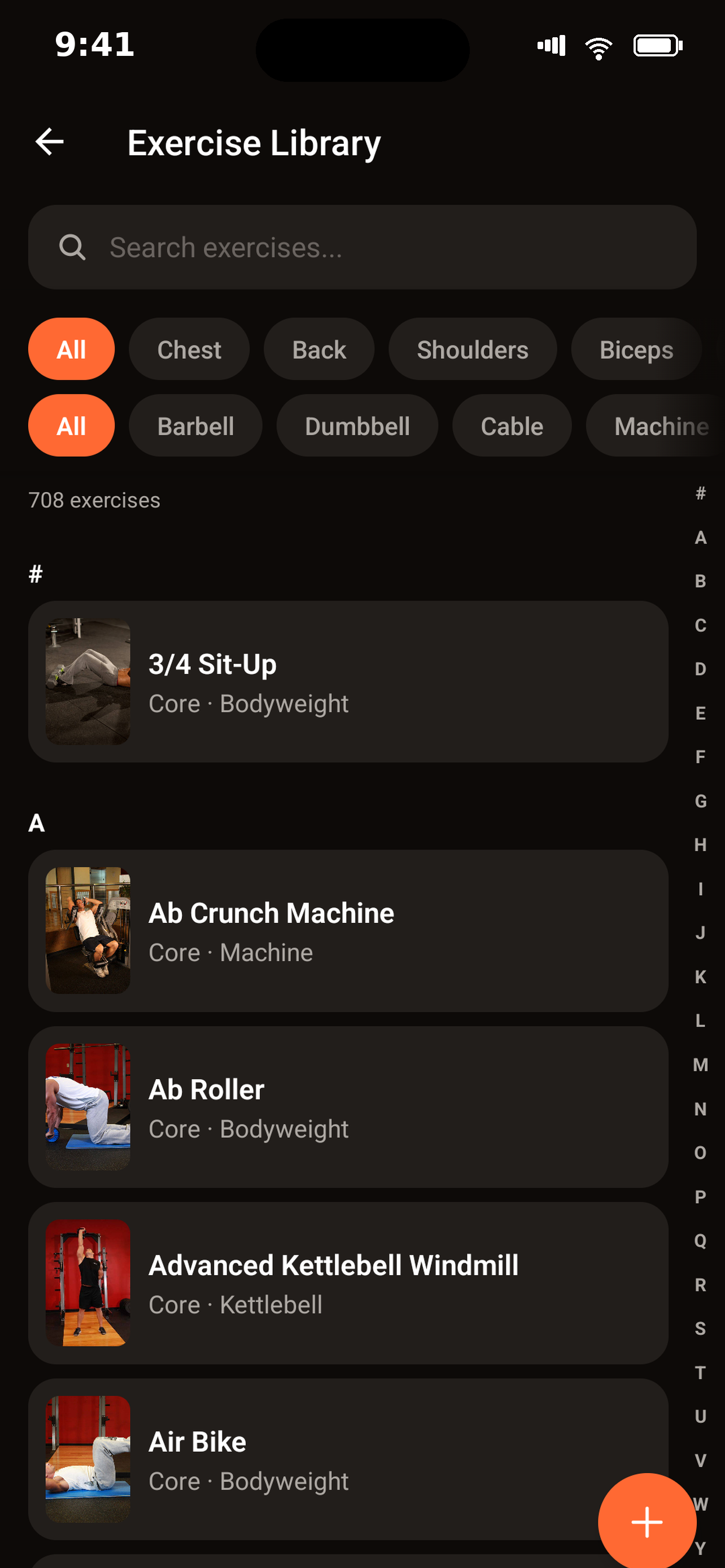
Over 700 exercises scored by equipment match, compound priority, whether it's already in the program, and your focus muscles.
Push/pull ratio, quad/hamstring ratio, overall coverage. If something's off, the program adjusts before you see it.
11 automated checks produce a score from 0 to 100. Only approved programs make it through.
Your data stays yours. No ads, no selling, no surveillance. Sync is opt-in.
Evidence-based articles on training programming, hypertrophy, and strength.
Understand the three volume landmarks — Minimum Effective Volume, Maximum Adaptive Volume, and Maximum Recoverable Volume — and how to use them to optimize your training.
Compare Push/Pull/Legs, Upper/Lower, and Full Body training splits. Learn the frequency, volume, and recovery trade-offs of each, and when to use them.
Learn what progressive overload is, the different methods to apply it (weight, reps, sets, frequency), double progression, and when to add weight to the bar.
Free. Science-based. Your program in 2 minutes.
— Fin